
Design Challenge
How might we nurture locally grounded approaches that transform Myanmar’s waste and recycling value chain from one that is linear (take-make-waste) to one that is circular (take-make-reuse) - and ultimately, more sustainable and just?
Partners
Private Foundation · Global Nonprofit
Project
Participatory research, prototyping, and service design to co-develop a pilot initiative supporting small enterprises, community groups, and municipal actors in Myanmar’s waste and recycling ecosystem.
Role
Project Lead
Overview
Before the 2021 coup, Myanmar experienced rapid economic growth, driven by foreign investment and urbanization. This expansion, however, came with an escalating waste crisis - plastic pollution choking waterways, overflowing landfills, and limited recycling infrastructure. With China’s 2018 ban on foreign recyclables, the urgency for locally led solutions grew even more pressing.
Between 2018 and 2020, I led a multidisciplinary team to design and launch Myanmar’s first circular economy pilot initiative. Rather than isolating the private sector, our approach intentionally brought together local businesses, community organizations, recyclers, and municipal leaders to co-create solutions that reflected lived realities.
Through work sessions, peer mentorship, and community engagement, we developed new pathways for collaboration, improving labor and safety conditions, waste segregation at source, and recycling efficiency. The initiative strengthened coordination across the value chain and demonstrated that systems change emerges when those most affected shape the process.
Following a successful pilot, the program was extended for an additional three-year period in 2020, continuing to build capacity and connection across Myanmar’s evolving circular economy landscape.
Duration of Engagement
2018 - 2020
Acknowledgements
Project Team: Karen Hsu, Nay Linn Oo, Naing Zaw Myo, Aung Kyaw Zin, Aye Chan Moe, Wah Wah Cho
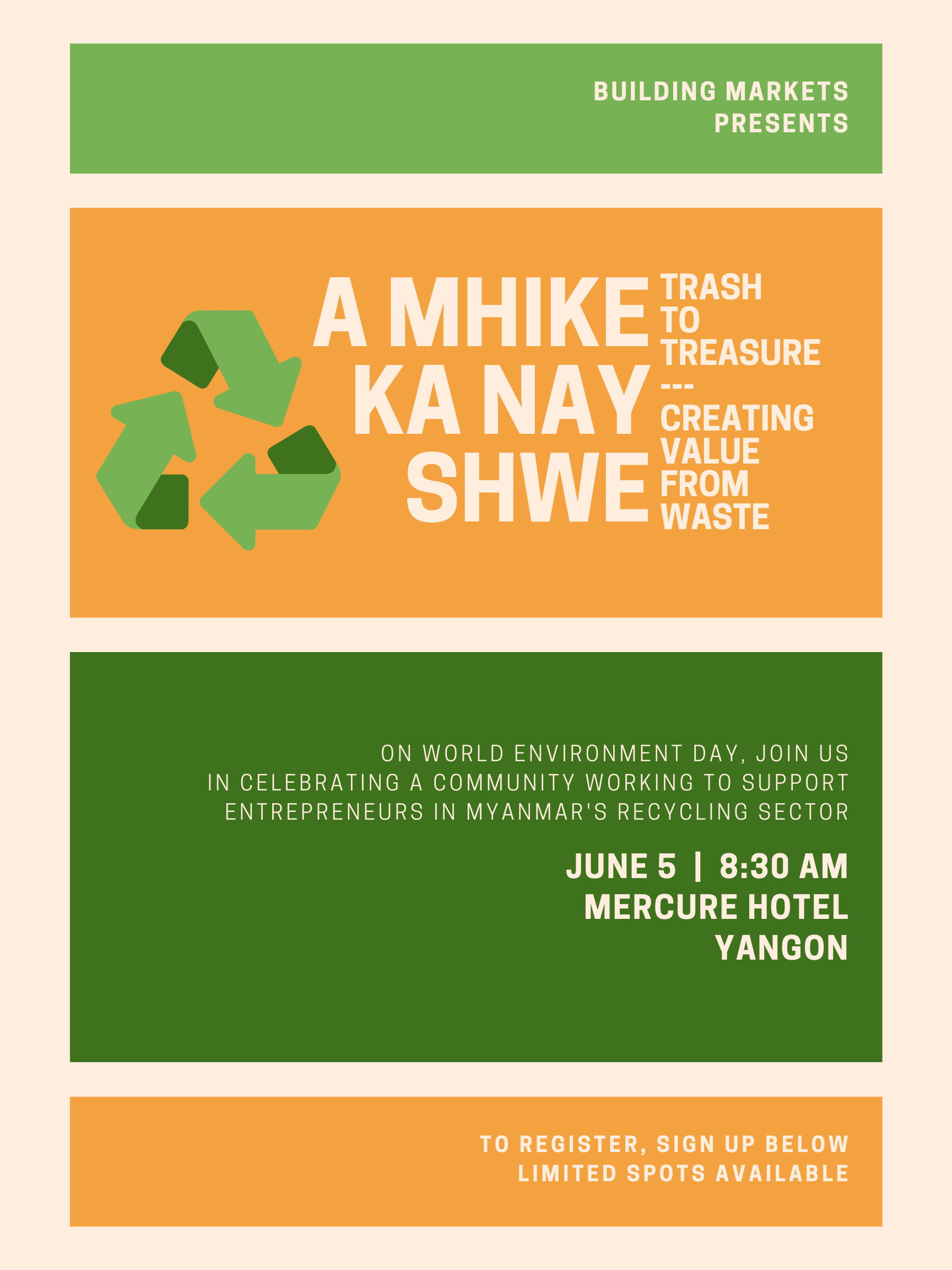
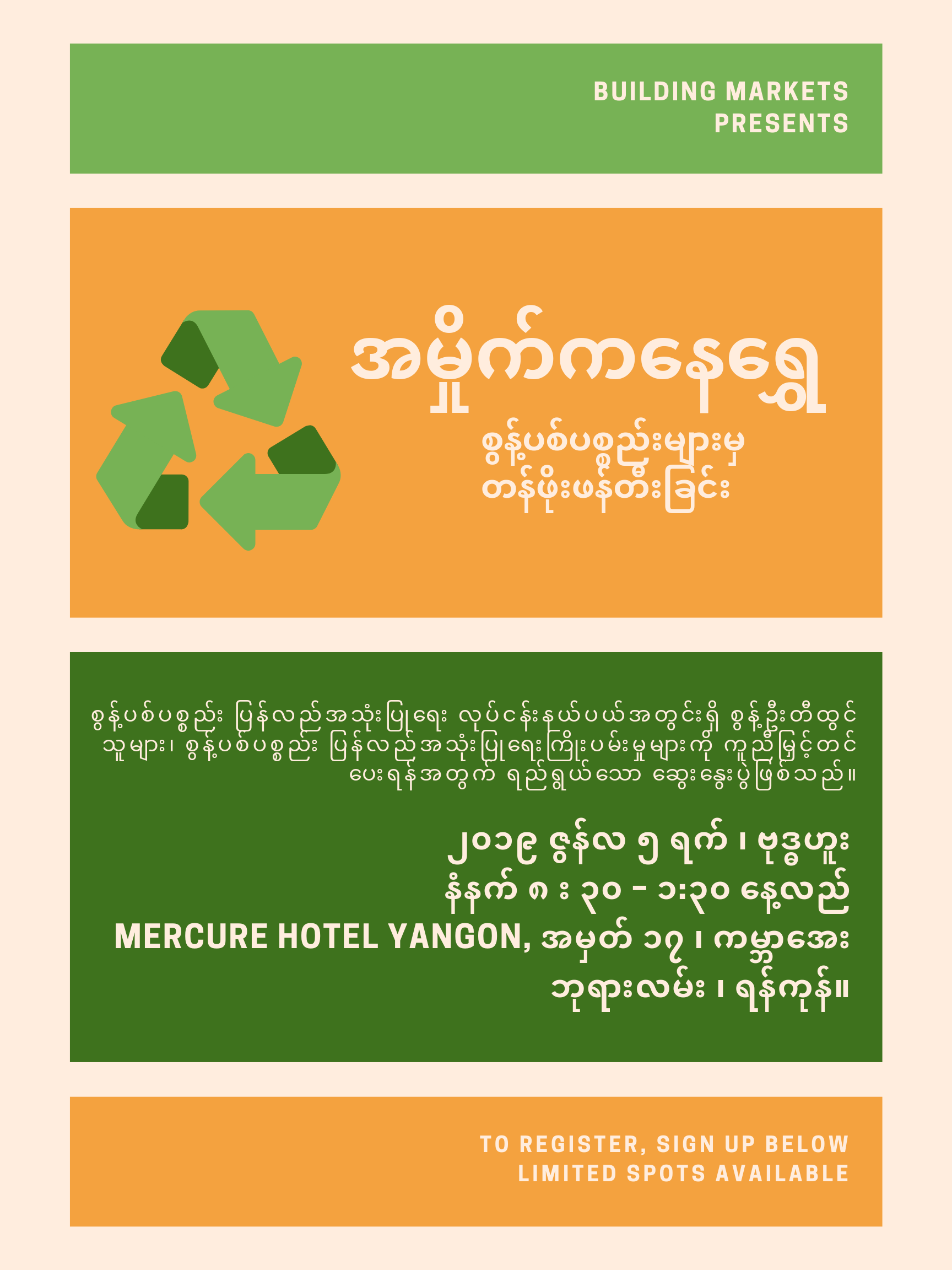
Images: Digital flyers for a zero-waste event on World Environment Day (June)